


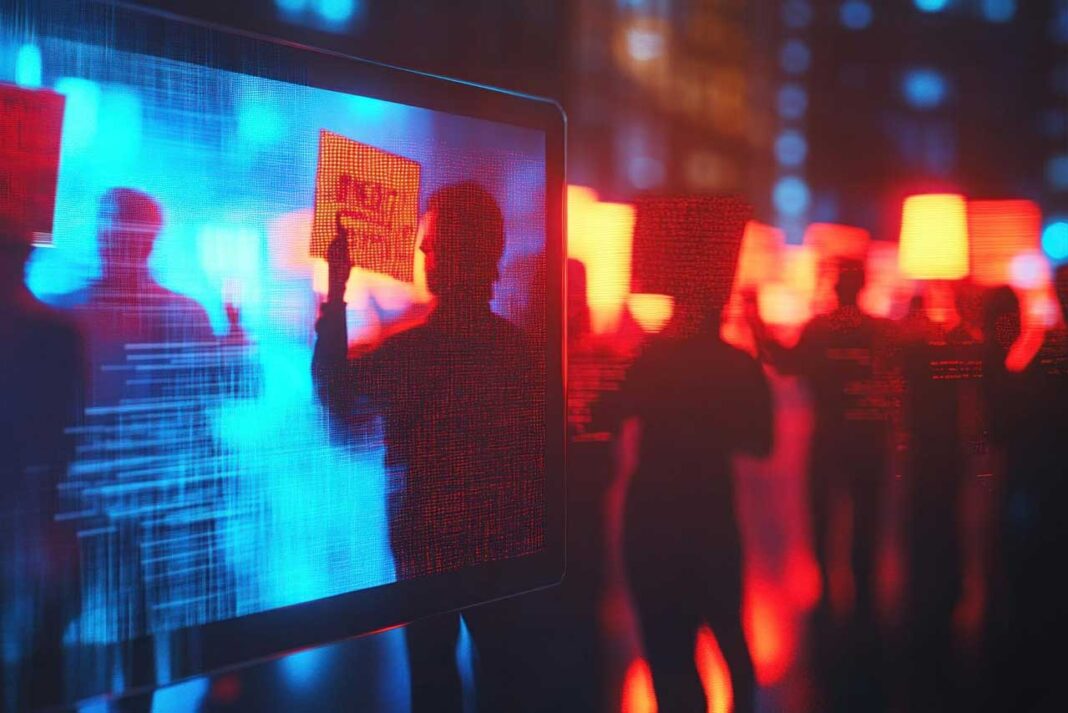
In a small studio filled with computer monitors, a technician adjusts a series of digital controls. On screen, a public figure appears to speak, delivering a message with convincing realism.
The voice sounds authentic. The facial expressions match natural speech patterns.
But the video is not real. It is a deepfake.
Advances in artificial intelligence have made it possible to generate highly realistic audio and video content that can imitate real people with remarkable accuracy. While the technology has legitimate applications in entertainment and education, it also presents new risks.
Nowhere are those risks more concerning than in democratic elections.
Imagine a video appearing online just days before an election, showing a candidate making controversial statements. Even if the video is quickly proven false, the damage may already be done.
In the fast-moving world of digital media, misinformation can spread rapidly before fact-checkers have time to respond.
Governments and technology companies are racing to develop tools capable of detecting synthetic media. Researchers are building algorithms that analyze subtle inconsistencies in video and audio to identify potential deepfakes.
At the same time, social media platforms are experimenting with content labeling systems designed to warn users when media may be manipulated. Yet the challenge extends beyond technology.
Public trust is at stake.
As deepfakes become more sophisticated, people may begin to question the authenticity of all digital content. This phenomenon, sometimes referred to as the “liar’s dividend,” allows individuals to dismiss real evidence as fake.
The result is a complex information environment where truth becomes harder to establish. Elections depend on informed decision-making. Voters rely on accurate information to evaluate candidates and policies.
Synthetic media introduces a new layer of uncertainty. The question is no longer just what information is available. It is whether that information can be trusted.