


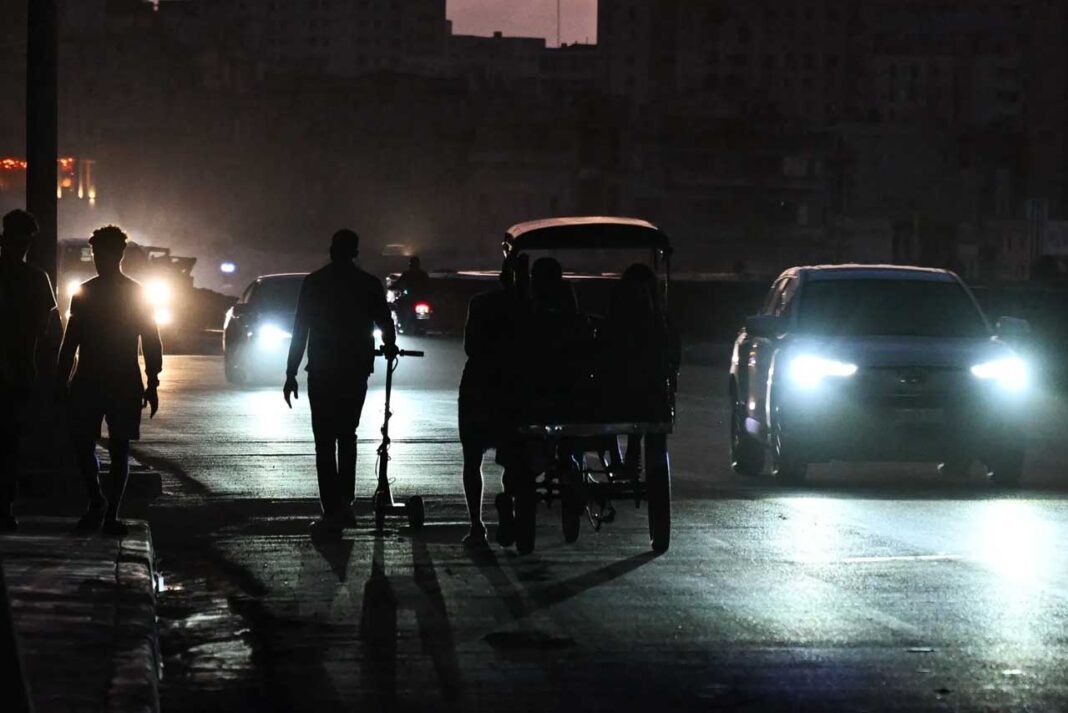
A Nation Plunges Into Darkness as Energy Crisis Deepens
For the second time in a week, Cuba went dark. On March 22, the National Electric System suffered a complete collapse, plunging the island’s 11 million residents into a blackout that exposed the fragility of an infrastructure already strained by decades of underinvestment and a tightening U.S. embargo.
The failure began at a thermoelectric plant in eastern Cuba, where authorities said a technical malfunction triggered a cascading shutdown that took the entire grid offline within hours. By evening, Havana a city of 2 million was reduced to scattered pockets of generator-powered light, while hospitals and emergency services relied on backup systems that were themselves running on borrowed time.
It was the second such collapse in less than a week. On March 16, a similar failure had left the country in darkness for nearly 48 hours before crews managed to restore partial service. This time, officials warned that repairs could take even longer. The Ministry of Energy and Mines announced that it was prioritizing the capital and key industrial facilities, but acknowledged that the system remained “fragile and vulnerable”.
The immediate cause of the collapse was mechanical failure, but the roots of the crisis run far deeper. Cuba’s energy infrastructure, much of it built with Soviet assistance in the 1980s, has been starved of maintenance and investment for decades. The U.S. embargo, tightened significantly during the Trump administration, has made it difficult to import spare parts or secure financing for upgrades. And a global energy crunch, exacerbated by the conflict in the Middle East, has left the island struggling to afford the fuel it needs to keep its plants running.
For ordinary Cubans, the blackouts are the latest chapter in a long-running saga of scarcity. Rolling power cuts have been a fact of life for years, but the frequency and duration of outages have accelerated dramatically since the war in Ukraine disrupted global energy markets. The March blackouts, however, marked a new level of crisis one that left even the capital without power for extended periods.
The government’s response has been a mix of damage control and defiance. Deputy Foreign Minister Carlos Fernandez de Cossio announced that Cuba was prepared for potential military aggression from the United States, directly responding to Trump’s threats against Iran by suggesting that Washington might turn its attention to Havana next. “We will not underestimate threats from Washington,” he said.
But for most Cubans, the immediate concern was not geopolitics but survival. In Havana, residents lined up for blocks to buy bread from bakeries running on diesel generators. In the provinces, families gathered around radios to hear updates on when or if power might return. Hospitals reported that they were operating on emergency reserves, and officials warned that water pumps would fail if the blackout persisted.
The international community has taken note. The United Nations has called for urgent humanitarian assistance, while the European Union has offered technical support to help restore the grid. But with the U.S. embargo still in place and the Trump administration showing little interest in easing restrictions, Cuba faces the prospect of more blackouts in the weeks ahead.
As of Monday morning, partial power had been restored to Havana, but officials cautioned that the system remained unstable. The question now is whether Cuba can stabilize its grid before the next failure—or whether the island’s energy crisis will become the new normal.