


How a 48-Hour Ultimatum and a $116 Barrel Are Reshaping the Global Order
The world woke up on March 31 to a stark new reality: oil at $116 a barrel, warplanes over the Persian Gulf, and a U.S. president threatening to “completely obliterate” Iran’s energy infrastructure if a deal isn’t reached within days. What began as a coordinated U.S.-Israeli military campaign against Iran on February 28 has metastasized into a full-blown economic war, one that is testing alliances, emptying gas stations, and forcing nations to choose sides in a conflict with no clear off-ramp.
The latest escalation came Monday, when President Donald Trump posted on Truth Social that the United States was in “serious discussions” with Iran to end military operations while simultaneously threatening to seize Kharg Island—Iran’s primary oil export terminal—and all of the country’s oil wells. “To be honest with you, my favorite thing is to take the oil in Iran,” Trump told the Financial Times in an interview, drawing a direct line to U.S. policy in Venezuela.
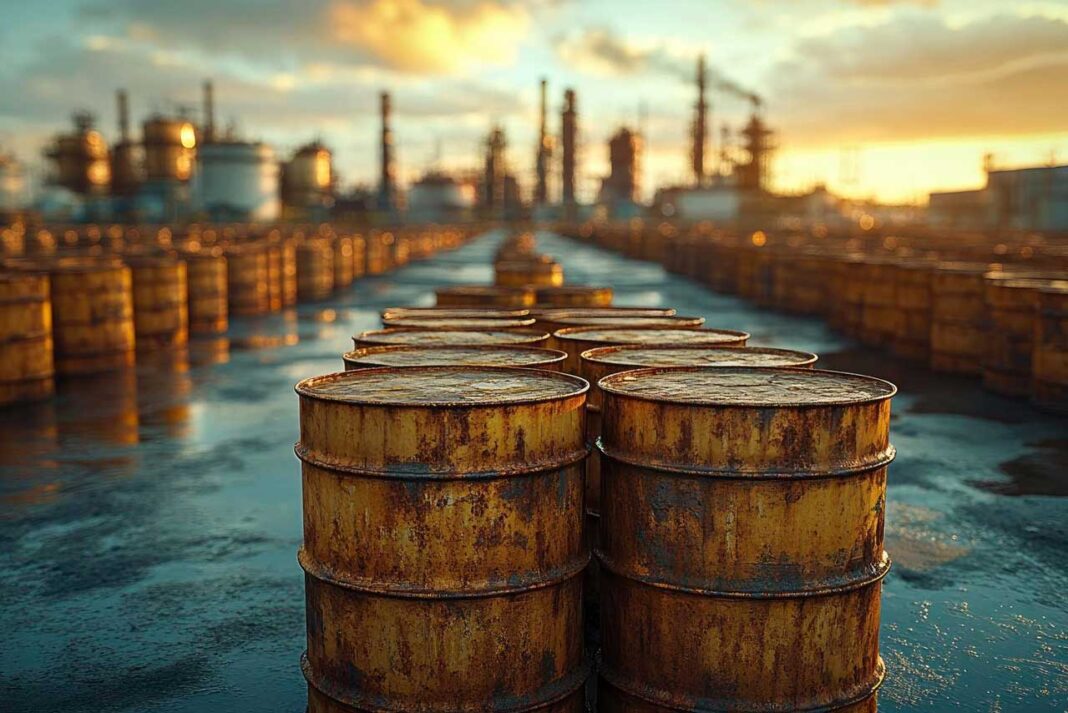
For global energy markets, the implications are catastrophic. Brent crude surged past $116 a barrel on Monday, a more than 50 percent increase since the conflict began a month ago. The Strait of Hormuz, through which roughly one-fifth of the world’s oil passes, has become a shooting gallery. Iran has restricted passage through the waterway; the U.S. has declared it is “already taking steps to control” the strait.
The human toll is mounting alongside the economic one. Iranian officials reported Monday that at least 281 students and teachers have been killed in U.S.-Israeli attacks since the war began, including four preschool children. The International Atomic Energy Agency confirmed that Iran’s heavy water production plant in Khondab has been “severely damaged” and is “no longer operational”. Power outages have been reported across Tehran and the northern city of Alborz following strikes on electricity infrastructure.
The conflict has also expanded geographically. Yemen’s Houthi rebels announced they have entered the war, launching missiles toward Israel. The United Arab Emirates, Saudi Arabia, Kuwait, and Bahrain have all reported intercepting Iranian missiles and drones. A worker was killed at a power and water desalination plant in Kuwait, and ten Kuwaiti soldiers were injured in the last 24 hours alone. In Bahrain, air defenses have intercepted 174 missiles and 391 drones since February 28.
Diplomatic efforts have so far failed to produce a breakthrough. Pakistan is hosting urgent talks between top diplomats from Saudi Arabia, Egypt, and Turkey, with Pakistani officials relaying messages between Washington and Tehran. But U.S. Secretary of State Marco Rubio acknowledged Monday that there are “fractures” inside Iran’s leadership, expressing hope that figures with “power to deliver” might take charge. “There are clearly people there talking to us in ways that previous people in charge in Iran have not spoken to us in the past,” Rubio told ABC News.
Yet even as Rubio spoke of diplomatic progress, the war machine continued to grind forward. The Israeli military announced it was expanding its ground campaign against Hezbollah in Lebanon, with Prime Minister Benjamin Netanyahu ordering the military to expand the occupation in southern Lebanon. Three UN peacekeepers from Indonesia have been killed in southern Lebanon in the past two days, a reminder that this conflict is already spilling across borders in ways that defy easy containment.
For ordinary citizens around the world, the crisis is no longer abstract. Australia’s Prime Minister Anthony Albanese convened an emergency National Cabinet meeting Monday to discuss fuel rationing and working-from-home recommendations. The Philippines has declared a national energy emergency, with officials warning that the country’s oil reserves will last only 40 to 45 days. Russia has announced a four-month ban on gasoline exports to prioritize domestic supply. Even Cuba, already crippled by the U.S. embargo, is receiving a lifeline: the U.S. is allowing a Russian oil tanker to deliver 730,000 barrels of crude to the island, breaking a months-long blockade.
The Group of Seven foreign ministers concluded two days of talks in Europe without reaching consensus on a ceasefire or withdrawal strategy. While Rubio told allies the war “might be over in weeks,” the gap between Washington’s optimism and the reality on the ground has rarely seemed wider.
As one European diplomat put it, speaking on condition of anonymity: “The Americans are talking about victory. The rest of us are just trying to figure out how to keep the lights on.”