


This Content Is Only For Subscribers
Millions Protest Trump’s Iran War in the Largest Anti-War Demonstrations Since the Invasion of Iraq
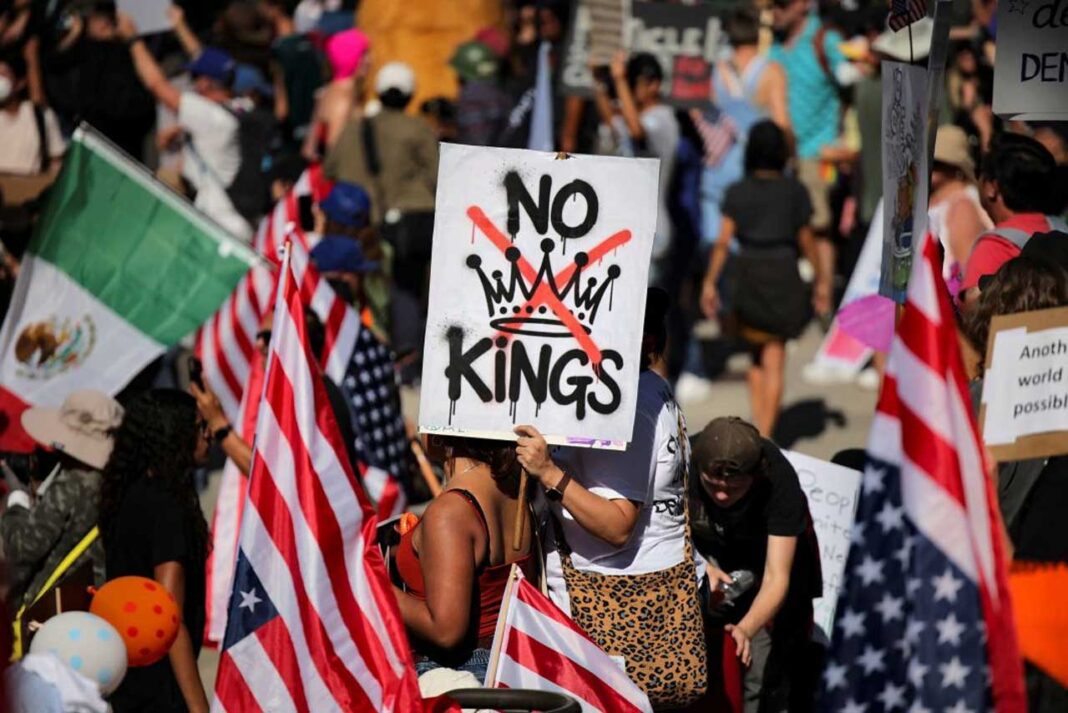
On Saturday, March 28, more than 3,000 “No Kings” rallies unfolded across the United States and in cities around the world, drawing millions of protesters who took to the streets to denounce President Trump’s handling of the Iran war and what they see as an administration that has abandoned democratic norms.
The protests, organized by progressive groups including Indivisible, MoveOn, and the 50501 Movement, marked the third No Kings rally since the movement began in June 2025. But Saturday’s demonstrations were by far the largest, with at least one rally in every state and flagship marches in Minneapolis and St. Paul that featured performances by Bruce Springsteen and speeches by Senator Bernie Sanders and Jane Fonda.
The name “No Kings” is derived from what organizers describe as Trump and his administration’s efforts to push the limits of executive power and undermine the Constitution. This weekend’s protests focused specifically on the Iran war, escalating immigration enforcement tactics, and the administration’s expansion of detention capacity nationwide.
In Tel Aviv, hundreds of Israelis gathered in unauthorized demonstrations to protest the war, clashing with police who sought to disperse the crowds. Weekly protests against the war launched by Israel and the United States against Iran have been taking place in Tel Aviv since the conflict began, though organizers say the movement has grown significantly in recent weeks.
The protests come as the human cost of the war continues to mount. In Iran, the death toll among civilians is increasingly difficult to track, but Iranian officials reported Monday that 281 students and teachers have been killed in U.S.-Israeli attacks. In Lebanon, Israeli airstrikes have killed at least 11 people and injured several others, according to the country’s official news agency.
The demonstrations also reflect a deeper anxiety about the trajectory of American democracy under Trump. The president’s recent suggestion that the U.S. may not be obligated to defend NATO allies—”Why would we be there for them if they’re not there for us?” he asked at an investment forum in Miami—has sent shockwaves through the alliance. European allies, who were not consulted ahead of the U.S.-Israeli attacks on Iran, are now openly questioning whether the United States can be relied upon as a security partner.
On Capitol Hill, the administration is preparing to submit a budget for fiscal year 2027 that would include $1.5 trillion in national security spending—the largest defense budget in American history. The proposal comes as the White House also announced that newly printed currency will feature Trump’s signature for the first time, breaking a 165-year tradition of having only Treasury Department signatures on U.S. banknotes.
For the millions who marched on Saturday, these moves are part of a broader pattern of executive overreach that they say demands a response. “We are watching a president consolidate power in ways that would have been unthinkable a decade ago,” one protester in Minneapolis told local media. “The war in Iran is just the most visible symptom.”
Whether the protests will translate into political pressure on the administration remains to be seen. But organizers are already planning the next round of demonstrations, and they show no signs of backing down.