


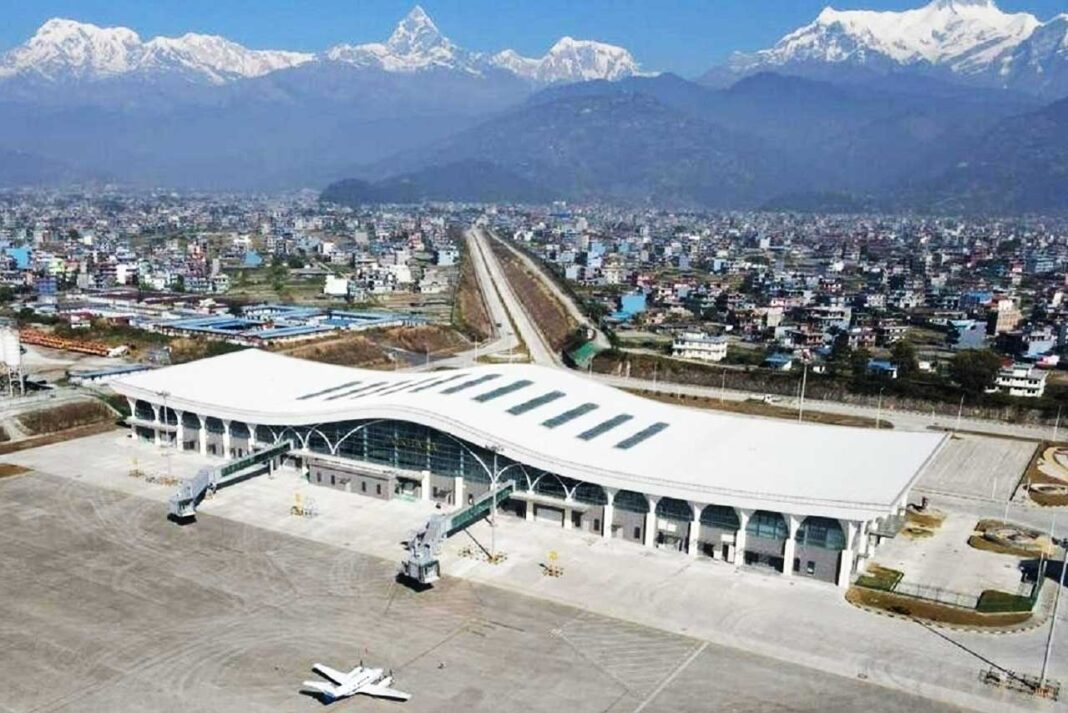
How a $1 Billion White Elephant in Nepal Became a Nation of Exiles
The runway was built for jumbo jets that never came. Today, children ride bicycles across its cracked tarmac while Tibetan exiles practice skateboard tricks beneath the shadow of the Himalayas. Ten years after international donors poured $1.2 billion into what was meant to be Nepal’s premier international airport, the project sits abandoned—a monument to corruption, mismanagement, and the strange resilience of human improvisation.
Located thirty miles south of Kathmandu, the Nijgadh International Airport was envisioned as a regional hub that would transform Nepal into a gateway between South Asia and China. Construction began in 2015 with promises of a 4,500-meter runway capable of handling the world’s largest aircraft. Instead, locals say the project became a feeding trough for political families, contractors, and a revolving door of foreign consultants who collected fees while forests were cleared and villages displaced.
By 2020, when Nepal’s auditor general revealed that $800 million had been spent without a single terminal building erected, international donors pulled out. The project was officially suspended in 2022. What remained was a 3,000-hectare scar on the landscape—and an unlikely opportunity for those who had been erased from it.
The Tibetan exile community, estimated at 20,000 across Nepal, began arriving in Nijgadh first. Denied citizenship, barred from most formal employment, and living in legal limbo since fleeing China in the 1960s, they found in the abandoned airport something rare: space. The terminal foundations became temporary housing. The service roads became market lanes. The control tower, repurposed as a community center, now hosts language classes for children born in exile who have never seen Tibet.
“They built this place for planes that will never land,” says Tenzin Wangmo, a 34-year-old mother of three who arrived three years ago. “But we landed here. We are the cargo they didn’t expect.”
The informal settlement has since grown into a town of roughly 15,000, with Tibetan tea houses, a makeshift school, and—most improbably—a skatepark constructed from abandoned construction materials. A collective of young exiles, calling themselves The Runway Riders, has built ramps from rebar and plywood, grinding across the same tarmac that was once graded for Airbus A380s.
“When you have nothing, you make something,” says 22-year-old Kelsang Dorjee, who learned to skateboard by watching YouTube tutorials on a smuggled phone. “This runway goes nowhere. But when I’m on my board, I feel like I’m going somewhere.”
The Nepali government has mostly ignored the settlement, neither recognizing nor evicting its residents. For the Tibetan exiles, this ambiguity is preferable to the alternative. “We exist in the cracks,” Wangmo says. “In the cracks, we are safe.”
But the cracks are closing. China has expressed interest in reviving the airport project, seeing it as a potential node in its Belt and Road Initiative. If construction resumes, the exiles will be displaced again—this time with nowhere left to land.
As one resident put it, watching a sunset from the unfinished control tower: “They say build back better. But we were never built in the first place.”