


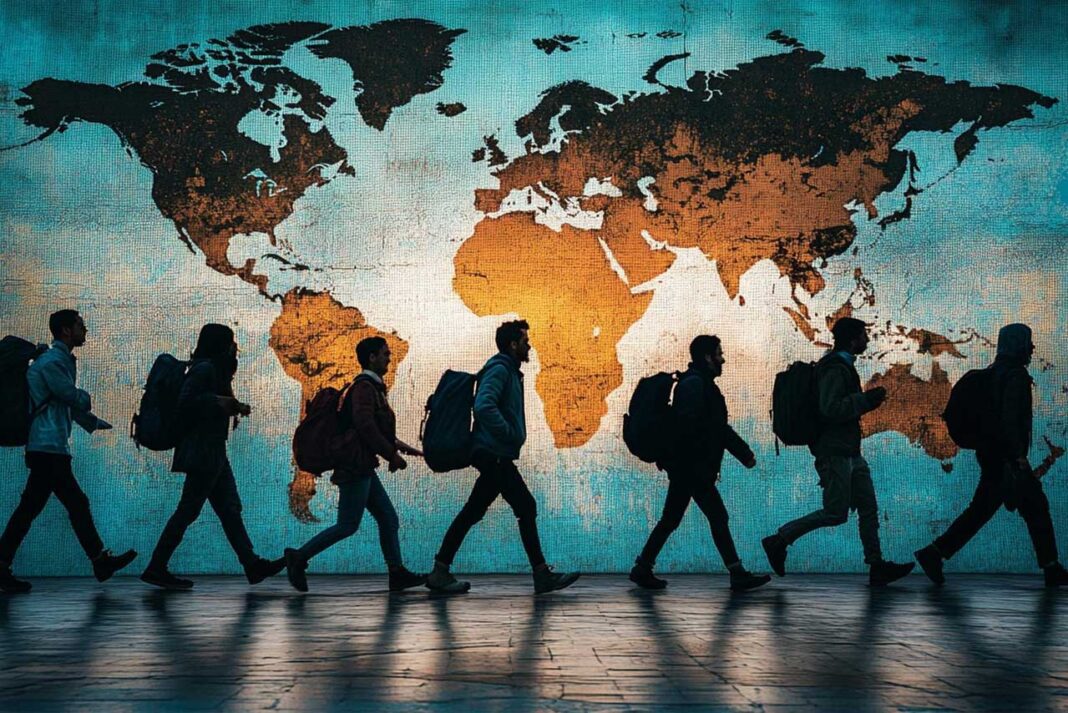
Migration has long been a defining feature of human history. People move for opportunity, safety, education, and survival.
But the forces shaping migration today are evolving rapidly, creating patterns that defy traditional assumptions about where people go and why.
For much of the twentieth century, migration was often framed as a journey from the developing world toward wealthier nations in Europe and North America. While that pattern still exists, a growing share of migration now occurs within regions rather than across continents.
In Africa, for example, most migrants move between neighboring countries rather than leaving the continent altogether. Economic opportunities in cities such as Nairobi, Lagos, and Johannesburg attract workers from surrounding regions.
Similarly, Southeast Asia has become a complex web of regional migration flows. Workers travel from rural Indonesia and Myanmar to construction sites and factories in Singapore, Malaysia, and Thailand.
Latin America has seen dramatic changes as well. Economic crises and political instability have triggered large migration movements, but many migrants remain within the region, relocating to nearby countries where language and cultural similarities ease integration.
Climate change is emerging as an increasingly powerful driver of these shifts.
Rising sea levels threaten coastal communities in Bangladesh and island nations across the Pacific. Prolonged droughts in parts of Africa and Central America are pushing agricultural workers toward urban centers.
Unlike traditional migration driven by sudden conflict, climate migration often unfolds gradually. Families relocate in stages, testing new opportunities before committing fully to permanent relocation.
Urban areas have become the primary destinations.
Megacities around the world are absorbing millions of new residents each year. This influx creates both opportunity and strain. Expanding populations drive economic growth but also increase pressure on housing, transportation systems, and public services.
Some governments have responded by tightening border controls.
Others are experimenting with migration policies that recognize labor shortages and demographic changes in aging societies.
Economists increasingly argue that migration can be a powerful engine of growth when managed effectively. Migrants often fill critical roles in healthcare, construction, agriculture, and technology sectors.
Yet migration remains one of the most politically sensitive issues in global politics.
The challenge for policymakers lies in balancing humanitarian obligations, economic needs, and social cohesion.
The geography of migration is shifting.
Understanding those changes will be essential for navigating the economic and political landscape of the twenty-first century.