


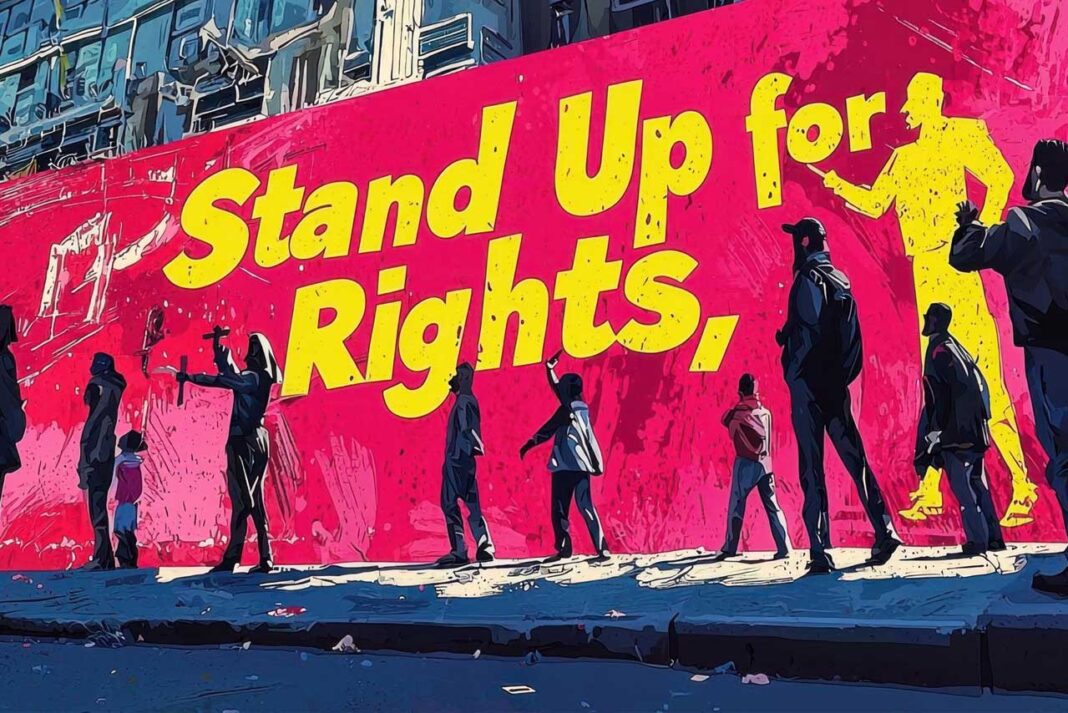
Across cities around the world, walls have become canvases for political expression. Street art once viewed primarily as vandalism now plays an increasingly visible role in social movements.
From the murals that emerged during protests in the United States to the colorful graffiti appearing on city walls in Chile, Hong Kong, and Beirut, artists are using public space to communicate messages that might otherwise be censored or ignored.
Street art carries a unique immediacy. Unlike traditional media, it appears directly within the urban landscape where people live and work. Passersby encounter the images unexpectedly, turning ordinary streets into spaces of reflection and debate.
Artists often blend symbolism, humor, and cultural references to convey complex ideas quickly. A single mural can capture emotions that lengthy political speeches struggle to express.
Authorities frequently attempt to remove or paint over these works. Yet new murals appear almost as quickly as old ones disappear.
The cycle illustrates how art continues to evolve as a form of civic dialogue.