



At nearly any hour of the day, the streets of Tehran pulse with the high-pitched buzz of motorcycles weaving through traffic.
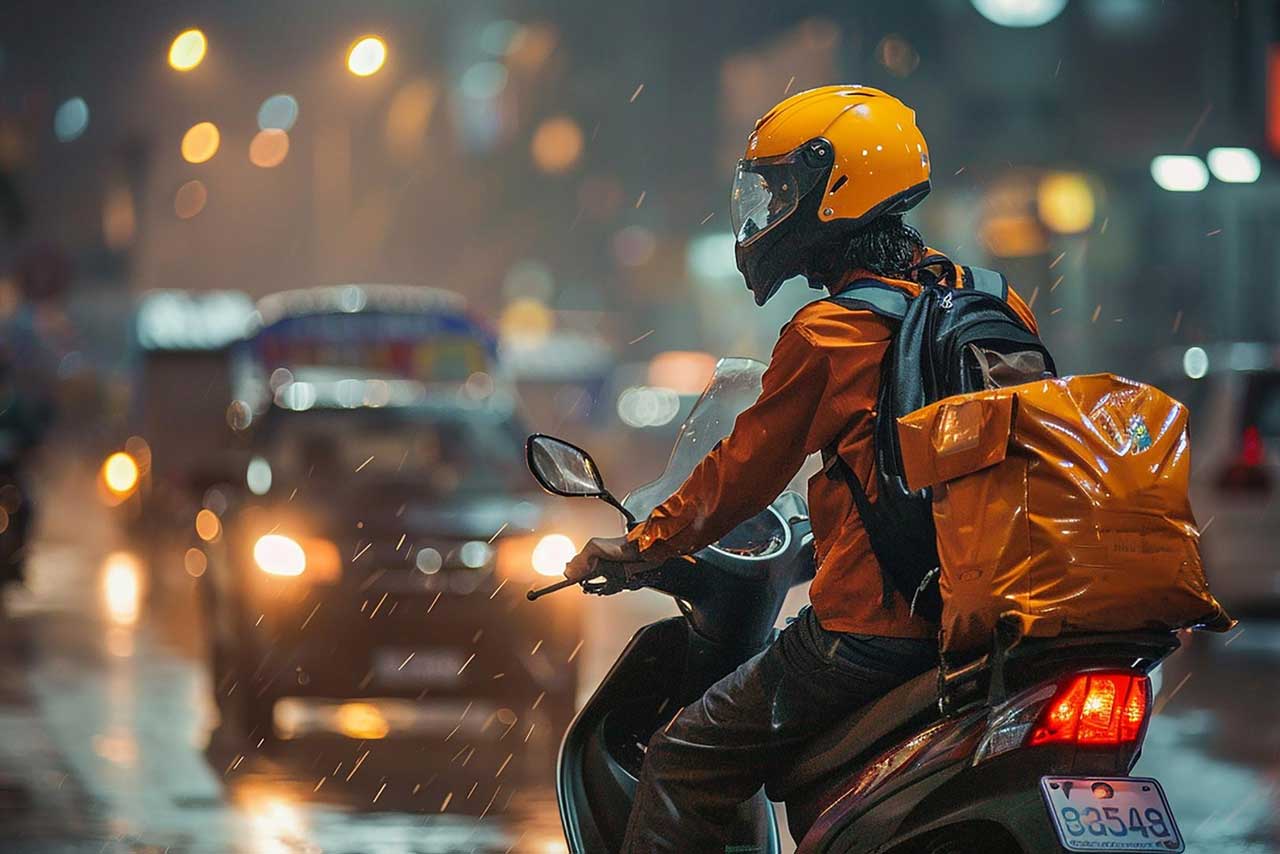
They dart between cars at red lights, slip through narrow alleys, and disappear into apartment courtyards carrying insulated delivery boxes strapped to their backs.
To a casual observer, they might appear to be just another layer of chaotic urban movement.
But the riders represent one of the most sophisticated informal logistics networks operating in any major city.
Over the past decade, Iran’s capital has quietly developed a motorcycle-based delivery economy capable of transporting everything from restaurant meals to medical supplies with remarkable speed and efficiency.
Sanctions, economic pressure, and regulatory complexity have forced Tehran’s residents to innovate in ways that rarely appear in official economic reports. The result is a sprawling network of small delivery cooperatives, independent riders, and app-based dispatch systems that collectively form the backbone of the city’s urban logistics.
Motorcycles dominate because they are perfectly suited to Tehran’s geography.
The city’s dense traffic and sprawling layout make car deliveries slow and unpredictable. Motorcycles can navigate congestion, access narrow streets, and park almost anywhere.
Fuel efficiency also matters.
With fluctuating fuel prices and economic uncertainty, motorcycles provide a cost-effective alternative to larger vehicles. Yet the true innovation lies not in the machines but in the coordination systems that guide them.
Many delivery networks rely on encrypted messaging apps to dispatch orders. Small teams of riders share real-time location updates and coordinate pickups through group chats that function as decentralized command centers.
Restaurant owners post orders. Couriers claim them. Payment arrangements are negotiated digitally. The system operates with minimal centralized oversight.
This flexibility allows the networks to adapt quickly to shifting economic conditions. If one courier falls behind schedule, another rider nearby can intercept the delivery. If a route becomes congested, riders share alternate pathways instantly.
In effect, the network behaves like a living organism.
Sanctions have inadvertently accelerated the growth of these systems. Restrictions on international financial platforms have forced local entrepreneurs to develop domestic alternatives for digital payments and logistics management.
Several Iranian technology startups now offer delivery platforms that resemble global services such as Uber Eats or DoorDash, but with features tailored to local realities.
Motorcycle riders function as the connective tissue linking these digital platforms to the physical city.
For many young Iranians, courier work provides one of the few accessible income opportunities in a constrained economy. Riders can join networks quickly without significant upfront investment. A motorcycle, a smartphone, and a willingness to navigate Tehran’s notoriously aggressive traffic are often enough to get started.
The work is demanding.
Riders spend long hours exposed to pollution, heat, and the constant risk of accidents. Yet many describe the job as empowering compared to traditional employment structures.
They set their own schedules. They choose which deliveries to accept. Some eventually build small courier teams of their own.
In certain neighborhoods, riders have become trusted community figures who know every alleyway, shopkeeper, and apartment block.
Their familiarity with the city’s geography borders on legendary.
Urban planners studying Tehran’s transportation patterns have begun recognizing the motorcycle economy as a form of adaptive infrastructure.
While official logistics companies operate within regulatory frameworks that can be slow to adjust, informal courier networks evolve rapidly in response to demand.
They are decentralized, resilient, and deeply embedded within the city’s social fabric.
There are, of course, tensions.
Authorities periodically attempt to regulate or restrict motorcycle traffic in certain districts. Safety concerns remain significant, and the environmental impact of thousands of small engines cannot be ignored. Yet attempts to suppress the networks often collide with economic reality.
For many businesses, motorcycle couriers are the only reliable way to move goods across the city quickly.
And for thousands of riders, the work represents a crucial source of income in uncertain times. The motorcycles buzzing through Tehran’s streets are more than vehicles.
They are the moving parts of a city that has learned to adapt under pressure. In the absence of perfect systems, people build the systems they need.
Sometimes those systems run on two wheels.